Free delivery on orders over €50
Free delivery on orders over €50

> On resellers
Available exclusively at our participating opticians
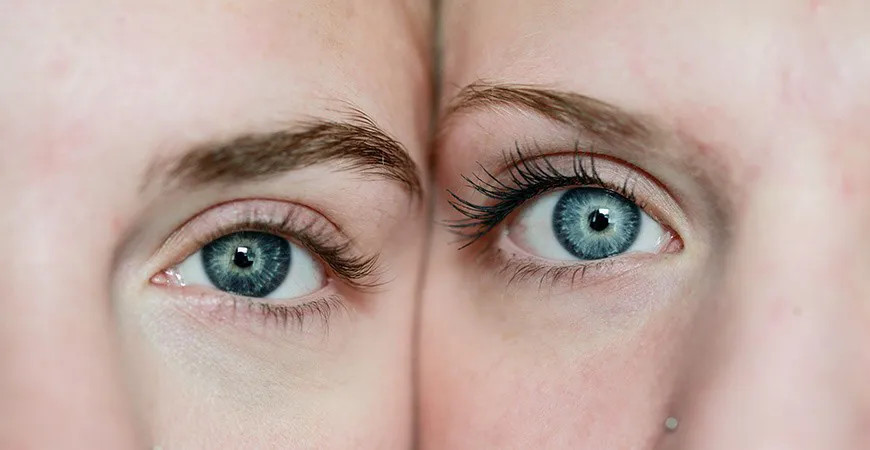
You may have already noticed it, but the most common eye color is brown: 80% of the world's population has brown eyes! In contrast, only 10% of the global population has blue eyes, 5% has hazel eyes and 2% has green eyes (lucky ones!).
However, the dominant eye color varies depending on the country: in Northern Europe, blue eyes are much more common (around 70% of the population), while in Mediterranean countries, brown eyes are the most widespread.
Eye color is determined at birth by two main factors: melanin production, which is also responsible for our skin color, and the transmission of genes from both parents.
But if you don't have the same eye color as your mother or father, don't worry! No need to check the neighbor's eyes… We’ll explain this genetic variation and everything it involves.
We are all made up of 46 chromosomes, inherited from our two parents. Each chromosome contains DNA, which is made up of genes. Eye color is therefore a hereditary trait: if both parents have brown eyes, their child has about a 70% chance of having the same eye color.
These genes then instruct our iris to produce a dark brown pigment called melanin, which is responsible for this famous color.
Heterochromia, or two differently colored eyes, is caused by a genetic variation linked to an excess or lack of melanin. This phenomenon remains rare (but fascinating) in humans and is much more common among animals.
Speaking of which, melanin, a natural dark brown pigment, is also responsible for eye color. It depends on the amount of melanin present. Through the refraction of light inside the eye, colors are then revealed. The more melanin produced, the darker the eye color will be.
If you’ve followed along so far, you now understand that someone with blue eyes produces less melanin than someone with brown eyes. Since blue eyes absorb less light, these individuals can also be more sensitive to light.
As for green eyes, their color comes from a combination of melanin and lipochrome, a yellow pigment (yes, we’re revisiting our color theory!).
Nationality, genes, and melanin all influence eye color. However, eye color can evolve and change throughout our lives, from birth to old age, whether through natural processes or deliberate choices.
Most babies, especially in Europe, are born with blue eyes. For many of them, this color changes and their final eye color appears within the first 18 months after birth. This is not true everywhere in the world: in Asia, babies are more often born with very dark eyes.
As we age, the iris can gradually lose some of its pigmentation.
You may have noticed it in yourself or your friends: some people’s eye color can slightly change depending on light intensity. These are sometimes called "chameleon eyes". They are the lucky ones who proudly say when the sun comes out: “Look, my eyes are so much lighter in the sunlight!”
Whether you believe it or not, diet may also influence eye color. Some studies suggest that foods containing glutathione could help lighten eyes by reducing melanin production. If you want to explore this idea, here is a list of foods that contain it (you’re welcome!).
Beyond eye color, some foods are also good for your eyesight.
Whether through makeup or clothing, knowing which colors work well with your eyes can help enhance them. For example, purple tones can intensify green eyes, while warm colors highlight blue eyes. And if there is one advantage to having brown eyes: almost everything suits them! Especially shimmering shades.
Choosing the wrong colors can make your gaze look harsher and prevent your natural eye color from standing out.
If you truly want to permanently change your eye color, there is one option: keratopigmentation. This technique consists of adding pigment to the cornea using a colorant inserted into an intracorneal tunnel.
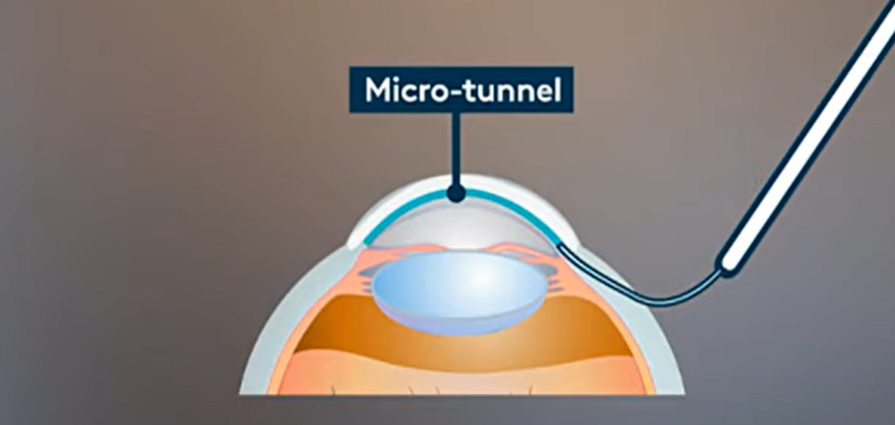
Source: https://www.cliniquedelavision.com/fr/nos-operations-laser/changer-la-couleur-des-yeux
However, be aware of the possible side effects and risks associated with this procedure. It may be wiser to choose colored contact lenses instead.
Panda theme is a modern, clean and professional Prestashop theme, it comes with a lot of useful features. Panda theme is fully responsive, it looks stunning on all types of screens and devices.

Panda theme is a modern, clean and professional Prestashop theme, it comes with a lot of useful features. Panda theme is fully responsive, it looks stunning on all types of screens and devices.

Panda theme is a modern, clean and professional Prestashop theme, it comes with a lot of useful features. Panda theme is fully responsive, it looks stunning on all types of screens and devices.
Panda theme is a modern, clean and professional Prestashop theme, it comes with a lot of useful features. Panda theme is fully responsive, it looks stunning on all types of screens and devices.
Panda theme is a modern, clean and professional Prestashop theme, it comes with a lot of useful features. Panda theme is fully responsive, it looks stunning on all types of screens and devices.
Panda theme is a modern, clean and professional Prestashop theme, it comes with a lot of useful features. Panda theme is fully responsive, it looks stunning on all types of screens and devices.
Panda theme is a modern, clean and professional Prestashop theme, it comes with a lot of useful features. Panda theme is fully responsive, it looks stunning on all types of screens and devices.
Panda theme is a modern, clean and professional Prestashop theme, it comes with a lot of useful features. Panda theme is fully responsive, it looks stunning on all types of screens and devices.
Panda theme is a modern, clean and professional Prestashop theme, it comes with a lot of useful features. Panda theme is fully responsive, it looks stunning on all types of screens and devices.
Panda theme is a modern, clean and professional Prestashop theme, it comes with a lot of useful features. Panda theme is fully responsive, it looks stunning on all types of screens and devices.
Panda theme is a modern, clean and professional Prestashop theme, it comes with a lot of useful features. Panda theme is fully responsive, it looks stunning on all types of screens and devices.
Panda theme is a modern, clean and professional Prestashop theme, it comes with a lot of useful features. Panda theme is fully responsive, it looks stunning on all types of screens and devices.
Panda theme is a modern, clean and professional Prestashop theme, it comes with a lot of useful features. Panda theme is fully responsive, it looks stunning on all types of screens and devices.
Panda theme is a modern, clean and professional Prestashop theme, it comes with a lot of useful features. Panda theme is fully responsive, it looks stunning on all types of screens and devices.
Panda theme is a modern, clean and professional Prestashop theme, it comes with a lot of useful features. Panda theme is fully responsive, it looks stunning on all types of screens and devices.
Panda theme is a modern, clean and professional Prestashop theme, it comes with a lot of useful features. Panda theme is fully responsive, it looks stunning on all types of screens and devices.
Panda theme is a modern, clean and professional Prestashop theme, it comes with a lot of useful features. Panda theme is fully responsive, it looks stunning on all types of screens and devices.
Panda theme is a modern, clean and professional Prestashop theme, it comes with a lot of useful features. Panda theme is fully responsive, it looks stunning on all types of screens and devices.
Panda theme is a modern, clean and professional Prestashop theme, it comes with a lot of useful features. Panda theme is fully responsive, it looks stunning on all types of screens and devices.
> On resellers
Available exclusively at our participating opticians
Please sign in first.
Sign in
Create a free account to save loved items.
Sign in Replacement lenses
 Adult Interchangeables arms
  Pounchs & microfibers