Free delivery on orders over €50
Free delivery on orders over €50

> On resellers
Available exclusively at our participating opticians

Our eyesight is one of our most valuable senses, yet it can deteriorate so easily, especially nowadays. Computers, smartphones... every day we spend hours in front of screens, and we're starting younger than ever. Don't worry, we're not here to lecture you! We're just as guilty at Binocle.
So, your eyesight is changing and you already wear glasses—that's a great start. But how do you know when it's really time to replace them? We often hear that glasses should be renewed every two to three years. In reality, it depends on each individual and there are no strict rules. However, there are a few clear signs that shouldn't be ignored.
Time for a quick eye-care lesson!
We've all experienced that awkward moment when the optician starts talking about technical terms like visual acuity, right? No more confused looks! Today, we're going to explain it in a simple way (because we're nice like that!).
Visual acuity is the eye's ability to distinguish letters or objects from the greatest possible distance. You know that test where the doctor covers one eye and asks you to read letters on a chart? That's how your visual acuity is measured. It then helps determine the correct prescription for your lenses.
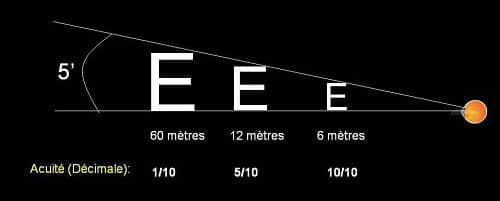
Do you spend your day in front of a screen and notice your eyes burning? You may be experiencing eye strain. Your eyes have to work harder and become tired more quickly. This is often accompanied by headaches at the end of the day.
If that's the case, it's time to book an eye examination with your ophthalmologist or have your vision checked by your optician (where regulations allow).
Our vision naturally becomes weaker at night. However, poor night vision is often one of the clearest signs that your prescription needs updating. You'll especially notice it while driving.
Don't wait too long, as poor vision at night can become dangerous for both you and others on the road.
If you find yourself pushing your glasses against your face to see more clearly or sliding them down to the tip of your nose to improve your focus, your prescription may no longer be suitable.
On the other hand, if you need to hold your phone, a book, or a restaurant menu farther away just to read it, that's also a strong indication that it's time for a new pair of glasses.
The human body naturally adapts to its environment. These little tricks may help temporarily, but over time they force your eyes to work harder and can increase eye fatigue.
We take our glasses on and off countless times every day. Even the most careful person can't avoid scratches forever. Over time, lenses inevitably become damaged, which can affect your visual acuity.
We know that getting an appointment with an ophthalmologist can often take a long time. But did you know you can also have your vision checked directly by your optician? That's right! Under certain conditions, of course. While an optician isn't a doctor, they are qualified to perform vision checks.
You can have your eyesight checked by your optician depending on your age and the validity of your prescription:
Your optician can update your lens prescription if your visual acuity has declined compared to your previous prescription.
Your optician can request a duplicate prescription from your ophthalmologist. Pretty convenient, isn't it?
In France, your complementary health insurance generally covers a new pair of glasses every two years, or after one year if your eyesight has worsened.
French complementary health insurance providers are currently allowed to reimburse up to €150 for your frame. A legal change planned for 2020 was expected to reduce this reimbursement to €100.
Panda theme is a modern, clean and professional Prestashop theme, it comes with a lot of useful features. Panda theme is fully responsive, it looks stunning on all types of screens and devices.
Panda theme is a modern, clean and professional Prestashop theme, it comes with a lot of useful features. Panda theme is fully responsive, it looks stunning on all types of screens and devices.
Panda theme is a modern, clean and professional Prestashop theme, it comes with a lot of useful features. Panda theme is fully responsive, it looks stunning on all types of screens and devices.
Panda theme is a modern, clean and professional Prestashop theme, it comes with a lot of useful features. Panda theme is fully responsive, it looks stunning on all types of screens and devices.
Panda theme is a modern, clean and professional Prestashop theme, it comes with a lot of useful features. Panda theme is fully responsive, it looks stunning on all types of screens and devices.
Panda theme is a modern, clean and professional Prestashop theme, it comes with a lot of useful features. Panda theme is fully responsive, it looks stunning on all types of screens and devices.
Panda theme is a modern, clean and professional Prestashop theme, it comes with a lot of useful features. Panda theme is fully responsive, it looks stunning on all types of screens and devices.
Panda theme is a modern, clean and professional Prestashop theme, it comes with a lot of useful features. Panda theme is fully responsive, it looks stunning on all types of screens and devices.
Panda theme is a modern, clean and professional Prestashop theme, it comes with a lot of useful features. Panda theme is fully responsive, it looks stunning on all types of screens and devices.
Panda theme is a modern, clean and professional Prestashop theme, it comes with a lot of useful features. Panda theme is fully responsive, it looks stunning on all types of screens and devices.
Panda theme is a modern, clean and professional Prestashop theme, it comes with a lot of useful features. Panda theme is fully responsive, it looks stunning on all types of screens and devices.
Panda theme is a modern, clean and professional Prestashop theme, it comes with a lot of useful features. Panda theme is fully responsive, it looks stunning on all types of screens and devices.
Panda theme is a modern, clean and professional Prestashop theme, it comes with a lot of useful features. Panda theme is fully responsive, it looks stunning on all types of screens and devices.
Panda theme is a modern, clean and professional Prestashop theme, it comes with a lot of useful features. Panda theme is fully responsive, it looks stunning on all types of screens and devices.
Panda theme is a modern, clean and professional Prestashop theme, it comes with a lot of useful features. Panda theme is fully responsive, it looks stunning on all types of screens and devices.
Panda theme is a modern, clean and professional Prestashop theme, it comes with a lot of useful features. Panda theme is fully responsive, it looks stunning on all types of screens and devices.
Panda theme is a modern, clean and professional Prestashop theme, it comes with a lot of useful features. Panda theme is fully responsive, it looks stunning on all types of screens and devices.
Panda theme is a modern, clean and professional Prestashop theme, it comes with a lot of useful features. Panda theme is fully responsive, it looks stunning on all types of screens and devices.
Panda theme is a modern, clean and professional Prestashop theme, it comes with a lot of useful features. Panda theme is fully responsive, it looks stunning on all types of screens and devices.
> On resellers
Available exclusively at our participating opticians
Please sign in first.
Sign in
Create a free account to save loved items.
Sign in Replacement lenses
 Adult Interchangeables arms
  Pounchs & microfibers